


The right to property is one of the natural rights with which a person was born, and no one can deprive him of it. In fact, the right to property is one of the most important foundations on which modern civilization and its accompanying development were built.
If we talk about the right to property as a natural right, then the right to housing is one of the human rights. In Egypt, the right to property and housing are closely linked to each other because for a large segment of people, housing is one of the forms of safe investment for their savings.
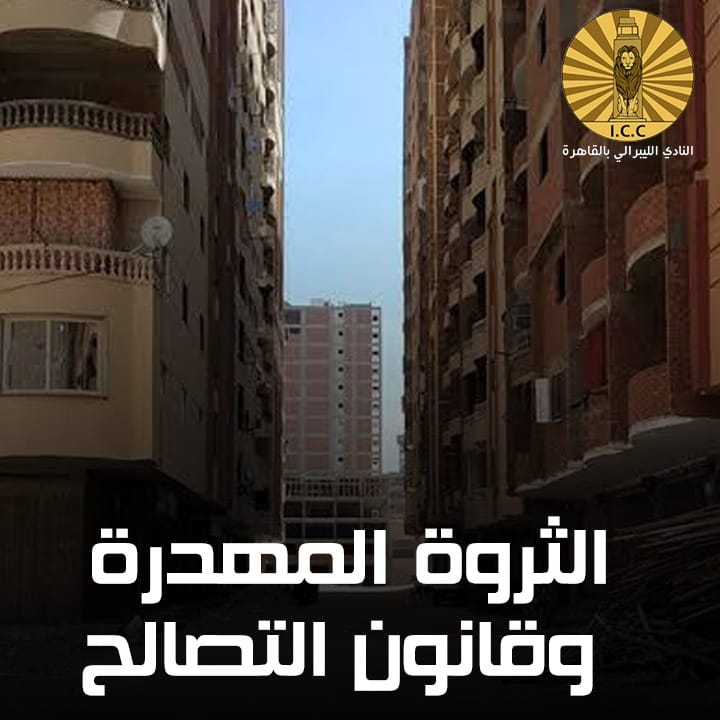
There are estimates of the value of real estate wealth in Egypt that exceed 100 trillion pounds, and this is a very, very large number. However, this wealth is wasted wealth because most of it is unregistered wealth, and therefore its disposal and official dealing with it are suspended, and the dealing with it is customary and unofficial, and thus the owners of these wealth do not benefit from it.
There are many reasons for real estate wealth to be disrupted or not registered
The most important of which is the procedural and legal complexities of the registration process
The second important reason is the presence of major violations in the buildings
The third is the deep corruption rooted in the local communities, which has become a reality.
With the continuation of informal housing, real estate wealth has turned into slum colonies, the majority of which are illegal, and the violations range from violations that threaten structural safety, as we have seen buildings leaning on each other, buildings collapsing, and buildings that cause adjacent buildings to fall or crack. In addition to this, there is pressure on the drainage and water networks. Consequently, facilities collapse in more than one place.
The problem is greater in the countryside because construction occurs on agricultural land, and this is understandable in light of the fragmentation of the agricultural area and that the land has become economically useless if it is cultivated in exchange for being cultivated and converted into housing, but what happens is that random drainage and water facilities are built, which leads to groundwater pollution. That’s why we find a spread of kidney disease in these areas.
Aside from delving into the socialist policies that have led to the spread of bureaucracy, the fragmentation of lands, and the complexity of the registration process…the government has currently issued a law to reconcile building violations, and this law can theoretically contribute to lifting restrictions on real estate wealth and releasing the value inherent in it.
But the law has several problems from our point of view.
First: It was left to the governors and the committees formed by the governorate to determine the prices of the reconciliation meter, and we saw that these prices were changed and reduced more than once, and this is evidence of inaccurate pricing.
Second: Although the law allows the violation to be paid in installments over 3 years, it specifies a large percentage as an advance payment for reconciliation.
Third: The law requires many procedures and steps for reconciliation.
Fourth: The law does not contribute to solving the problem of registering real estate ownership, on the contrary, it is more complicated.
Despite all the amendments that the government approved to the law and granting more than one grace period for reconciliation, in addition to reducing the value of the square meter in reconciliation as a kind of response to complaints and making it easier for citizens, and the government’s announcement to direct 65% of the proceeds to develop infrastructure, but we see that it is better for the law to be integrated with the system. Real estate taxes and real estate registration.
First: The prices of reconciliation meters are determined based on the rental value of the property on which the real estate tax is paid. This was
1-It will make the reconciliation prices more fair because they are the prices closest to the real value.
2- It will integrate the governorates’ databases with real estate taxes, which in turn reduces tax evasion from real estate taxes.
Second: If a reconciliation fee is paid in the range of 10-15% of the value of the violation, and the rest is paid in installments with real estate taxes for longer periods, while dealing with the property is prohibited until payment of the reconciliation value is completed. This would facilitate reconciliation for a larger number of citizens, because there are many who complain about the violation. Arranging the amounts allocated for serious reconciliation and ensuring the collection of real estate tax as well.
Third: Simplifying the procedures required for reconciliation, and instead of telling the Real Estate Registry not to register any property except after obtaining a certificate that there are no violations, it would have been better to cancel the registration fees on the properties that were reconciled and automatically register the properties that were reconciled.
Fourth: The government has an inventory of violations, and this requires that there be a database available to inquire about buildings that have been reconciled or that still have violations. This will reduce dealing with illegal properties, in addition to reducing crowding in government offices at a time when we are still suffering from the Coronavirus.
Fifth: Local corruption, which has caused a great deal in slum colonies and a huge volume of violations as a result of centralization. Therefore, serious work must be done to transform decentralization effectively. We have all seen that local corruption linked to centralization has a much greater cost and harm to the nation and citizens than decentralization.
Sixth: To ensure an effective transition to decentralization, the real estate tax must be transformed into a local tax whose revenues are estimated to achieve a portion of the financial independence of the various local units.
Seventh: Decentralized local administration. The presence of elected local councils can reduce the presence of new violations, in addition to ensuring the transmission of a correct image and true representation of the various local units and the priorities of their residents. At that time, we will not find successive amendments to the laws that are issued and cause confusion and pressure on citizens, as happened in the Reconciliation Law. .