


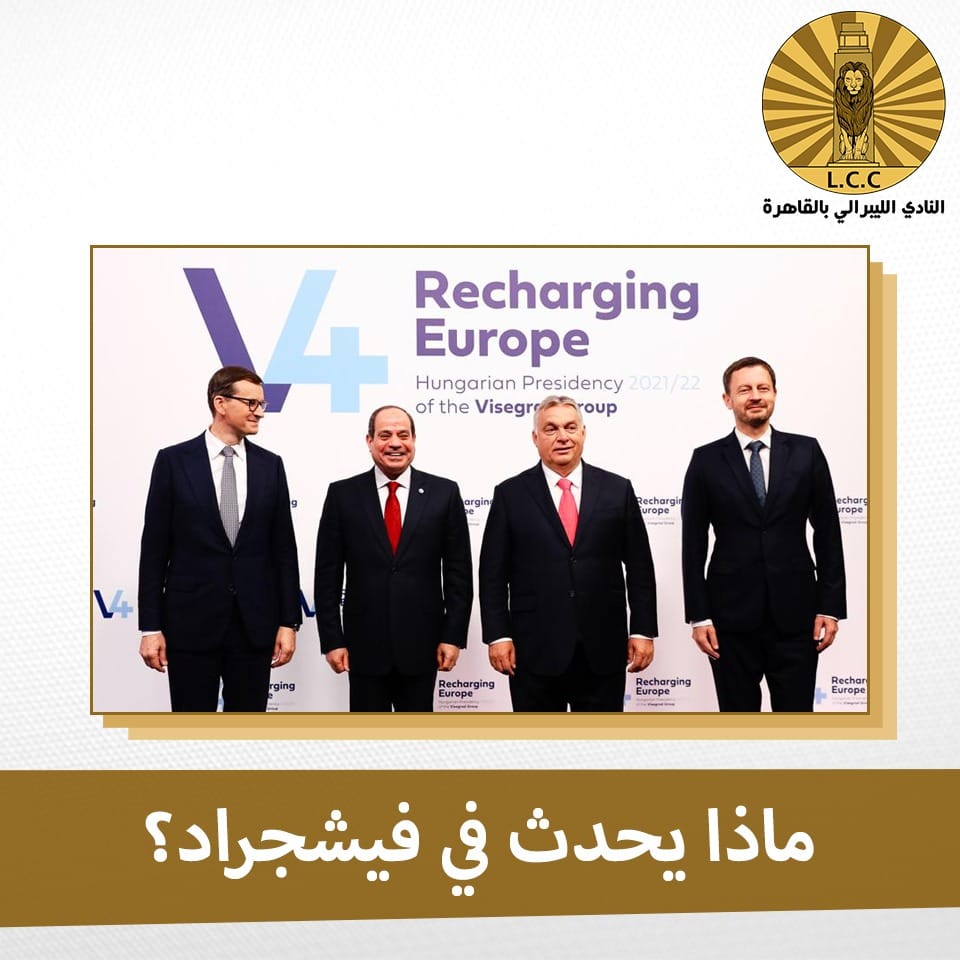
Behind the historic castle of King Corvinus, Visegrad grew, a small city that adorns the Danube coast north of Budapest, the capital of Hungary. In addition to being an important tourist attraction, Visegrad is the site of the First Visegrad Conference in 1933, when the kings of Hungary, Poland, and Bohemia (now the Czechs) decided to stop the influence of Visegrad.
(Habsburg) Kings of Austria and the most ancient imperial families in Europe.
The historical background of the small city was a strong motivation for Hungarian President Koons in 1991 to invite the leaders of Poland and Czechoslovakia (now the Czech and Slovak Republics) to meet and consult about the future of the European Quartet after the rift that struck the Soviet Union and threatened its collapse before it officially disintegrated at the end of the same year.
The years following the collapse of the Soviet Union witnessed remarkable activity by the leaders of the three countries before they were four after the independence of the Czech Republic from Slovakia, as all the countries of the Quartet joined the European Union in 2004 in an important transformation of the role of the Union. The path of the Quartet differed regarding the adoption of the euro as an official currency, as Poland retained the zloty. The Polish government followed its Czech approach, as it kept the Czech koruna in the face of the union’s unified monetary system, which succeeded in attracting the interest of Slovakia until it adopted the euro as its official currency in 2008.
The four countries have several areas in common, the first of which is the convergence of economic and political conditions, as their economic systems suffered from the burdens of the Soviet legacy, being affected less severely than the countries of Eastern Europe. They also share the rankings of high-income countries according to the World Bank’s divisions, led by Poland, and the industries of the four countries are also relatively compatible and they share In the quality of the automotive and mechanical industries sectors, in addition to the heavy industries, which Hungary excels in exporting regionally and globally, as well as the transportation industry, as the alliance aims, within its programs, to launch a high-speed railway line between the four countries.
Politically, the countries of the group face a kind of isolation within the European Union. Over short periods of time, the four countries faced pivotal comments on the consistency of their authority practices with European Union standards, as Poland – a conservative – tightened the 2016 amendments that affected the independence of the judiciary and freedom of the media, in violation of the Lisbon Treaty. In the footsteps of Poland, the Republic of Hungary followed.
Militarily, Poland led the Visegrad Military Alliance, which was established in 2011, and its activities were suspended, but work resumed after the Russian intervention in Ukraine in 2014, as the alliance intensified its joint training and maneuvers, and the four countries share a plan to develop nuclear energy and build new reactors. In Poland, the government intends to begin The first nuclear power station in the country will be operated in 2033, while the Czech Republic needs three new stations to meet the increasing demand for electricity. This is the same thing that prompted Hungary to develop another branch of its only and important nuclear station – the Baks station – which has become unable to meet the country’s energy needs.
At an important turning point in the group’s path, the European Union approved its new mechanism to reduce and suspend European funds from the common budget fund in the event that dangerous solutions arise for misuse of funds or violations of the rule of law, which is what the Union intended to implicitly direct to several countries, including Poland and Hungary, which means freezing European aid and grants. For the two countries, which prompted it to take judicial steps against the mechanism in the European Court of Justice.
As for Slovakia, the specter of violations of human rights and media freedom continues to cast a shadow, especially after the incident of February 2018, when orders were issued to kill journalist Jan Kuciak and his fiancée, Martina Kusnerova, by public shooting, in an incident that caused the resignation of the Prime Minister, as the journalist almost achieved important results in an investigation into a major corruption case involving the Prime Minister. And his men, Slovakia faces a huge challenge to combat corruption and bribery, which strengthened President Caputova’s victory to win the presidential seat in 2019 as the first female lawyer and anti-corruption activist to hold this position.
As for the Czechs, talk of conflicts of interest has not stopped, especially in light of the tenure of billionaire Andrej Babiš, who was faced by the European Commission with explicit charges of fraud and misuse of European Union funds in managing his private businesses. The general elections a few days ago turned the page on Babiš after his party failed to gain a majority.
The Visegrad Group embodies a model of the struggle between European unity and the national sovereignty of the Union countries, an equation that is difficult for the Union’s treaties and laws, despite their precise details, to resolve, especially in powerful European countries such as France and Spain.
Egypt is participating in the Visegrad Summit for the second time at the presidential level after participating for the first time in July 2017 to consult on issues of combating terrorism and illegal immigration and to discuss aspects of cooperation in the economic and political fields within a group of countries friendly to the Quad Alliance, which included the countries of Romania and Bulgaria.